
Topzle Topzle

Muhammad Ali Jinnah

Updated: Wikipedia source
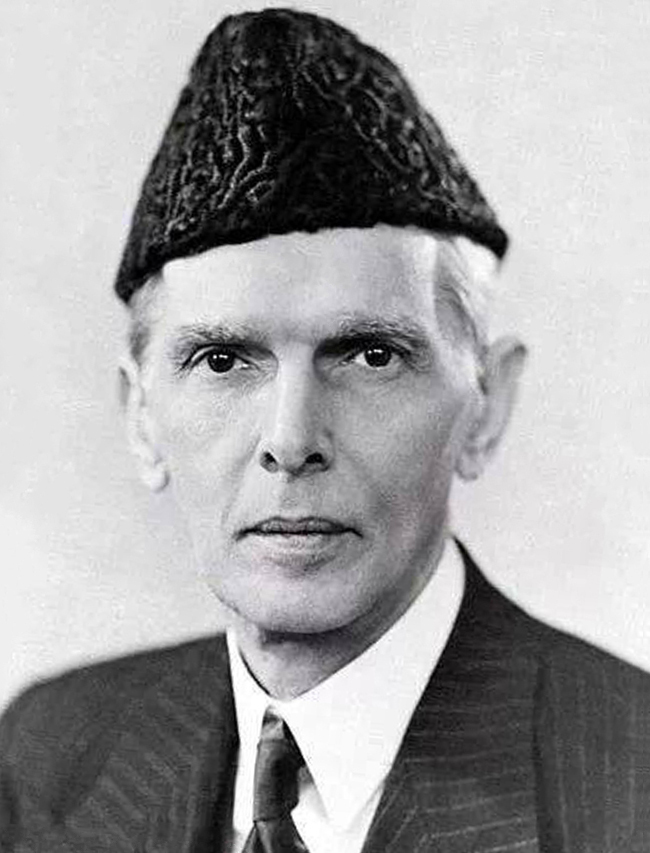
Muhammad Ali Jinnah

Muhammad Ali Jinnah (born Mahomedali Jinnahbhai; 25 December 1876 – 11 September 1948) was a barrister, politician, and the founder of Pakistan. Jinnah served as the leader of the All-India Muslim League from 1913 until the inception of Pakistan on 14 August 1947 and then as Pakistan's first governor-general until his death a year later in 1948. He is known as Quaid-e-Azam (meaning "Great Leader") in Pakistan. Born at Wazir Mansion in Karachi, Jinnah was trained as a barrister at Lincoln's Inn in London, England. Upon his return to India, he enrolled at the Bombay High Court, and took an interest in national politics, which eventually replaced his legal practice. Jinnah rose to prominence in the Indian National Congress in the first two decades of the 20th century. In these early years of his political career, Jinnah advocated for Hindu–Muslim unity, helping to shape the 1916 Lucknow Pact between the Congress and the All-India Muslim League, in which Jinnah had also become prominent. Jinnah became a key leader in the All-India Home Rule League, and proposed a fourteen-point constitutional reform plan to safeguard the political rights of Muslims in the Indian subcontinent. In 1920, however, Jinnah resigned from the Congress when it agreed to follow a campaign of satyagraha, which he regarded as political anarchy. After joining the All-India Muslim League, Jinnah worked for the rights of Muslims in the subcontinent to protect them from the threat of marginalisation in a Hindu-dominated state. In 1940, the Muslim League, led by Jinnah, passed the Lahore Resolution. During the Second World War, the League gained strength while leaders of the Congress were imprisoned, and in the provincial elections held shortly after the war, it won most of the seats reserved for Muslims. Ultimately, the Congress and the Muslim League could not reach a power-sharing formula that would allow the entirety of British India to be united as a single state following independence, leading all parties to agree instead to the independence of a Hindu-majority India, and for a predominantly Muslim state of Pakistan. As the first governor-general of Pakistan, Jinnah worked to establish the government of the new nation and policies to aid the millions of Muslim migrants who had emigrated from regions that became part of the Dominion of India to Pakistan after the independence of both states, personally supervising the establishment of refugee camps. Jinnah died at age 71 in September 1948, just over a year after Pakistan gained independence from the United Kingdom. He left a deep and respected legacy in Pakistan. Several universities and public buildings in Pakistan bear Jinnah's name. He is revered in Pakistan as the Quaid-e-Azam ("Great Leader") and Baba-e-Qaum ("Father of the Nation"). His birthday is also observed as a national holiday in the country. According to his biographer, Stanley Wolpert, Jinnah remains Pakistan's greatest leader.

Infobox

Monarch
George VI
Prime Minister
Liaquat Ali Khan
Preceded by
Position established
Succeeded by
Liaquat Ali Khan
Deputy
Maulvi Tamizuddin Khan
Born
Mahomedali Jinnahbhai(1876-12-25)25 December 1876Karachi, Bombay Presidency, British India
Died
11 September 1948(1948-09-11) (aged 71)Karachi, Pakistan
Resting place
Mazar-e-Quaid
Political party
Muslim League (1947–1948)
Other politicalaffiliations
Indian National Congress (1906–1920)All-India Muslim League (1913–1947)
Spouses
mw- Emibai Jinnah (m. 1892; died 1893) Rattanbai Petit (m. 1918; died 1929)
Relations
See Jinnah family
Children
Dina Wadia
Parent
Jinnahbhai Poonja (father)
Alma mater
Lincoln's Inn
Profession
mw- .inline, .inline dl, .inline ol, .inline ul, dl dl, dl ol, dl ul, ol dl, ol ol dd dd dd , dd dt , dd li , dt dd , dt dt , dt li , li dd dd dd , dd dt , dd li , dt dd , dt dt , dt li , li dd dd ol li Barristerpolitician
Party
Muslim League (1947–1948)

Tables

· External links
New office
New office
Preceded byThe Earl Mountbatten of Burmaas Viceroy of India
New office
Governor-General of Pakistan 1947–48
Speaker of the National Assembly of Pakistan 1947–48
Succeeded byKhawaja Nazimuddin
Succeeded byMaulvi Tamizuddin Khan
Preceded byThe Earl Mountbatten of Burmaas Viceroy of India
Governor-General of Pakistan 1947–48
Succeeded byKhawaja Nazimuddin
New office
Speaker of the National Assembly of Pakistan 1947–48
Succeeded byMaulvi Tamizuddin Khan

References

  1. Urdu: محمد علی جناح; [mʊɦəmːəd̪ əli d͡ʒɪnɑː(ɦ)]
  2. Gujarati: માહમદ અલી ઝીણાભાઈ; [mɑɦməd̪ əli dʒʱiɳɑbʱəi]
  3. While Jinnah's birthday is celebrated as 25 December 1876, there is reason to doubt that date. Karachi did not then issu
  4. Jinnah was permanent president of the League from 1919 to 1930, when the position was abolished. He was also sessional p
  5. Rare speeches and documents of Quaid-e-Azam
  6. https://pid.gov.pk/site/profile/1
    https://pid.gov.pk/site/profile/1
  7. Moini 2003.
  8. Ahmed, p. 4.
  9. Pirbhai 2017, p. 25.
  10. Encyclopedia Britannica
    https://www.britannica.com/biography/Mohammed-Ali-Jinnah
  11. Ahmed 2010.
  12. Singh, pp. 30–33.
  13. Wolpert, pp. 3–5.
  14. Pirbhai 2017, p. 26.
  15. Ahmed, p. 3.
  16. Dani 1979.
  17. Beg 1986.
  18. Dawn
    https://www.dawn.com/2009/12/26/fact-file-jinnahaes-family/
  19. Dawn
    https://www.dawn.com/news/1709519
  20. Swamy 1997.
  21. Ghosh 1999.
  22. Malik 2006.
  23. Puri, p. 34.
  24. Singh, p. 54.
  25. Ahmed, p. 26.
  26. Sharif 2010.
  27. Bolitho, pp. 5–7.
  28. Read, pp. 95–96.
  29. Wolpert, pp. 8–9.
  30. Wolpert, pp. 9–10.
  31. Wolpert, pp. 12–13.
  32. Singh, p. 56.
  33. Engineer 2006, p. 72.
  34. Banerjee 1981, p. 219.
  35. Mehmood 1998, p. 725.
  36. Bolitho, pp. 10–12.
  37. Singh, p. 55.
  38. Wolpert, p. 9.
  39. Ahmed, p. 85.
  40. Wolpert, pp. 14–15.
  41. Bolitho, pp. 14–17.
  42. Wolpert, p. 17.
  43. Ahmed, pp. 4–5.
  44. Ahmed, p. 212.
  45. bombayhighcourt.nic.in
    https://bombayhighcourt.nic.in/libweb/historicalcases/cases/The_Caucus_Case_-_1908.html
  46. Bolitho, p. 20.
  47. Wolpert, p. 29.
  48. Bolitho, p. 17.
  49. Wolpert, p. 19.
  50. Eleazar 2017.
  51. Dawn 2003.
  52. Bolitho, p. 23.
  53. Cohen, pp. 18, 24.
  54. Malik, p. 120.
  55. Wolpert, p. 20.
  56. Singh, pp. 41–42.
  57. Wolpert, p. 28.
  58. Wolpert, pp. 20–23.
  59. Wolpert, pp. 24–26.
  60. Singh, p. 47.
  61. "The Statesman: Jinnah's differences with the Congress"
    https://web.archive.org/web/20060127234847/http://www.pakistan.gov.pk/Quaid/politician7.htm
  62. Wolpert, p. 33.
  63. Singh, p. 75.
  64. Wolpert, pp. 34–35.
  65. Wolpert, pp. 35–37.
  66. Wolpert, pp. 38, 46–49.
  67. SHATTERED LANDS Five Partitions and the Making of Modern Asia
  68. Bolitho, pp. 61–70.
  69. Ahmed, pp. 11–15.
  70. Singh, pp. 90–93.
  71. Wolpert, pp. 61–71.
  72. Mohiuddin, p. 61.
  73. Jalal, p. 8.
  74. Bolitho, pp. 84–85.
  75. Wolpert, pp. 71–72.
  76. Wolpert, pp. 74–76, 87.
  77. Singh, pp. 130–131.
  78. Wolpert, pp. 89–90.
  79. Wolpert, pp. 96–105.
  80. Singh, p. 170.
  81. Bolitho, pp. 99–100.
  82. Wolpert, pp. 119–130.
  83. Singh, p. 172.
  84. Bolitho, p. 102.
  85. Bolitho, pp. 101–102.
  86. Wolpert, pp. 370–371.
  87. Jalal, pp. 9–13.
  88. Wolpert, p. 133.
  89. Bolitho, pp. 104–106.
  90. Malik, p. 130.
  91. Bolitho, p. 106.
  92. Wolpert, p. 134.
  93. Wolpert, p. 136.
  94. Talbot 1984.
  95. Jalal, pp. 15–34.
  96. Singh, p. 188.
  97. Jalal, p. 35.
  98. Singh, p. 198.
  99. Jalal, pp. 39–41.
  100. Moore, p. 548.
  101. Moore, p. 532.
  102. Malik, p. 121.
  103. Ahmed, p. 80.
  104. Hibbard, pp. 121–124.
  105. Hibbard, p. 124.
  106. Puri, p. 35.
  107. Ahmed, p. 8.
  108. Singh, p. 200.
  109. Singh 2009, p. 2.
  110. Khan 2010, p. 151.
  111. Kenworthy 1968, p. 230.
  112. Karim 2010, p. 25.
  113. Ziring 1980, p. 67.
  114. Aziz 2001, p. 98.
  115. Singh 1997, p. 153.
  116. Singh & Mishra 2010, p. 342.
  117. Ahmed, pp. 62–73.
  118. Kazimi 2005, p. 114.
  119. Karim 2010, p. 26.
  120. Khan 2010, p. 152.
  121. Bolitho, p. 123.
  122. Singh, p. 223.
  123. Jalal, pp. 47–49.
  124. Singh, pp. 225–226.
  125. Singh, p. 225.
  126. Jalal, pp. 51–55.
  127. Singh, pp. 232–233.
  128. Jalal, pp. 54–58.
  129. Wolpert, p. 185.
  130. Wolpert, p. 189.
  131. Jalal, pp. 62–63.
  132. Moore, p. 551.
  133. Jalal, pp. 71–81.
  134. Wolpert, pp. 196–201.
  135. Moore, p. 553.
  136. Jalal, pp. 82–84.
  137. Wolpert, pp. 208, 229.
  138. Ahmed, p. 107.
  139. Singh 2009, p. 316.
  140. "Nidhi Dalmia | Jinnah House"
    https://gunnidhidalmia.com/jinnah-house/
  141. Singh, pp. 266–280.
  142. Singh, pp. 280–283.
  143. Singh, pp. 289–297.
  144. Jalal, p. 132.
  145. Singh, pp. 301–302.
  146. Singh, p. 302.
  147. Wolpert, p. 251.
  148. Jalal, pp. 171–172.
  149. Bolitho, p. 158.
  150. Wolpert, p. 254.
  151. Singh, pp. 302, 303–308.
  152. Singh, pp. 308–322.
  153. Jalal, pp. 221–225.
  154. Jalal, pp. 229–231.
  155. Wolpert, p. 305.
  156. Moore, p. 557.
  157. Jalal, pp. 246–256.
  158. Jalal, p. 237.
  159. Khan, p. 87.
  160. Khan, pp. 85–87.
  161. Khan, pp. 85–86.
  162. Wolpert, p. 312.
  163. Jalal, p. 250.
  164. Wolpert, p. 317.
  165. Wolpert, pp. 318–319.
  166. Wolpert, pp. 319–325.
  167. Jalal, pp. 249–259.
  168. Jalal, pp. 261–262.
  169. Khan, pp. 2–4.
  170. Wolpert, pp. 327–329.
  171. Jalal, pp. 287–290.
  172. Bolitho, p. 187.
  173. Campbell-Johnson 1951, p. 125.
  174. Singh, pp. 393–396.
  175. Jalal, pp. 290–293.
  176. Wolpert, pp. 333–336.
  177. Wolpert, pp. 337–339.
  178. Wolpert, pp. 341–342.
  179. Khan, pp. 124–127.
  180. Lawson 2007.
  181. Malik, p. 131.
  182. Ahmed, p. 145.
  183. Roberts 2003, pp. 108–109.
  184. Let Us Build Pakistan
    https://web.archive.org/web/20150414074638/https://lubpak.com/archives/222082
  185. Korejo 1993.
  186. Navid 2013.
  187. RGandhi, p. 416.
  188. Mohiuddin, pp. 78–79.
  189. Malik, pp. 131–132.
  190. RGandhi, pp. 407–408.
  191. Lumby 1954, pp. 237–238.
  192. Wolpert, p. 347.
  193. Wolpert, pp. 347–351.
  194. RGandhi, p. 435.
  195. RGandhi, pp. 435–436.
  196. Noorani 2014, pp. 13–14.
  197. Raghavan 2010, p. 111.
  198. Adamec 2016.
  199. Wolpert, p. 359.
  200. Wolpert, pp. 158–159, 343.
  201. Ahmed, p. 9.
  202. Ahmed, p. 10.
  203. Wolpert, p. 343.
  204. Wolpert, pp. 343, 367.
  205. Wolpert, p. 361.
  206. Wolpert, pp. 361–362.
  207. Wolpert, pp. 366–368.
  208. Singh, pp. 402–405.
  209. Wolpert, pp. 369–370.
  210. Singh, p. 407.
  211. Dawn 2017.
  212. Singh, pp. 406–407.
  213. Wolpert, p. 370.
  214. Ahmed, p. 205.
  215. Ahmed 1998.
  216. Nasr 2006, pp. 88–90.
  217. United News of India 1998.
  218. Ahmed, p. 195.
  219. Jinnah: Creator of Pakistan
    https://books.google.com/books?id=HMMfAAAAIAAJ
  220. The Pakistan Development Review
    https://doi.org/10.30541%2Fv40i4iipp.1155-1165
  221. The Pakistan Development Review
    https://www.jstor.org/stable/41260383
  222. Who Was Who
    https://doi.org/10.1093/ww/9780199540884.013.u227451
  223. Foundations Of Pakistan
    http://archive.org/details/foundations-of-pakistan-vol-ii-s.-s.-pirzada-1970
  224. The Express Tribune
    https://tribune.com.pk/story/1874068/iqbal-jinnah-envisioned-state-medina
  225. DAWN.COM
    https://www.dawn.com/2011/09/17/secular-or-islamist/
  226. Economic and Political Weekly
    https://www.jstor.org/stable/4419894
  227. dw.com
    https://www.dw.com/en/an-islamic-or-secular-pakistan/a-17325395
  228. BBC News
    https://www.bbc.com/news/world-asia-24034873
  229. Oriente Moderno
    https://www.jstor.org/stable/25817914
  230. Mohiuddin, pp. 74–75.
  231. "Lecture by Prof. Stanley Wolpert"
    https://web.archive.org/web/20180929223341/http://www.humsafar.info/wolp02.php
  232. Singh, p. 406.
  233. Malik, p. 134.
  234. Mohiuddin, pp. 81–82.
  235. The Rediscovery of India
    https://books.google.com/books?id=fhovRowWr1gC&pg=PA240
  236. The Milli Gazette
    http://www.milligazette.com/news/1281-was-quaid-e-azam-jinnah-the-only-founder-of-pakistan
  237. Fischer 2010.
  238. "Projects of The Jinnah Society"
    http://jinnahsociety.org.pk/TheJinnahAwards.html
  239. The Express Tribune
    https://tribune.com.pk/story/1906998/1-muhammad-ali-jinnah-way-unveiled-new-york-honour-pakistans-founder/
  240. Mehmood 1998, p. 869.
  241. The Hindu
    https://web.archive.org/web/20090503222829/http://www.thehindu.com/2003/09/07/stories/2003090701152000.htm
  242. Dawn 2005.
  243. The Indian Express
    http://www.indianexpress.com/news/muslim-law-doesnt-apply-to-jinnah-says-daughter/372877/0
  244. Quaid-e-Azam Jinnah : A Selected Bibliography
  245. Ahmed, p. 31.
  246. Ahmed, p. 200.
  247. Tudor 2013, p. 95.
  248. Jalal, p. 221.
  249. Ahmed, p. 27.
  250. Ahmed, p. 28.
  251. Seervai 2005, p. 127.
  252. Bolitho, p. 208.
  253. Ahmed, p. 126.
  254. Jinnah: A Life
  255. Hindustan Times
    https://web.archive.org/web/20050609004505/http://www.hindustantimes.com/news/181_1391007%2C001300270001.htm
  256. "Nehru not Jinnah's polity led to partition"
    https://web.archive.org/web/20090822004045/http://jaibihar.com/nehru-patel-conceded-pakistan-to-jinnah-jaswant/11301/
  257. LiveMint
    https://web.archive.org/web/20181215224018/https://www.livemint.com/Politics/SErCZ0ewVhfPabjq7ie2MK/BJP-expels-Jaswant-Singh-over-praise-for-Jinnah-in-his-book.html
  258. "Jaswant Singh expelled over Jinnah remarks"
    https://web.archive.org/web/20090821162128/http://jaibihar.com/jaswant-singh-expelled-over-jinnah-remarks/11454/
  259. "Christopher Lee on the making of legends"
    https://news.bbc.co.uk/2/hi/entertainment/3733894.stm
  260. "Christopher Lee talks about his favorite role"
    https://www.youtube.com/watch?v=CE_1ofnBFos
  261. Daily Times
    https://web.archive.org/web/20131018024943/http://www.dailytimes.com.pk/default.asp?page=2011%5C07%5C09%5Cstory_9-7-2011_pg3_6
  262. Ahmed, pp. 28–29.
  263. Moore, pp. 529–569.
  264. Wolpert, p. vii.
Image
Source:
Tip: Wheel or +/− to zoom, drag to pan, Esc to close.